


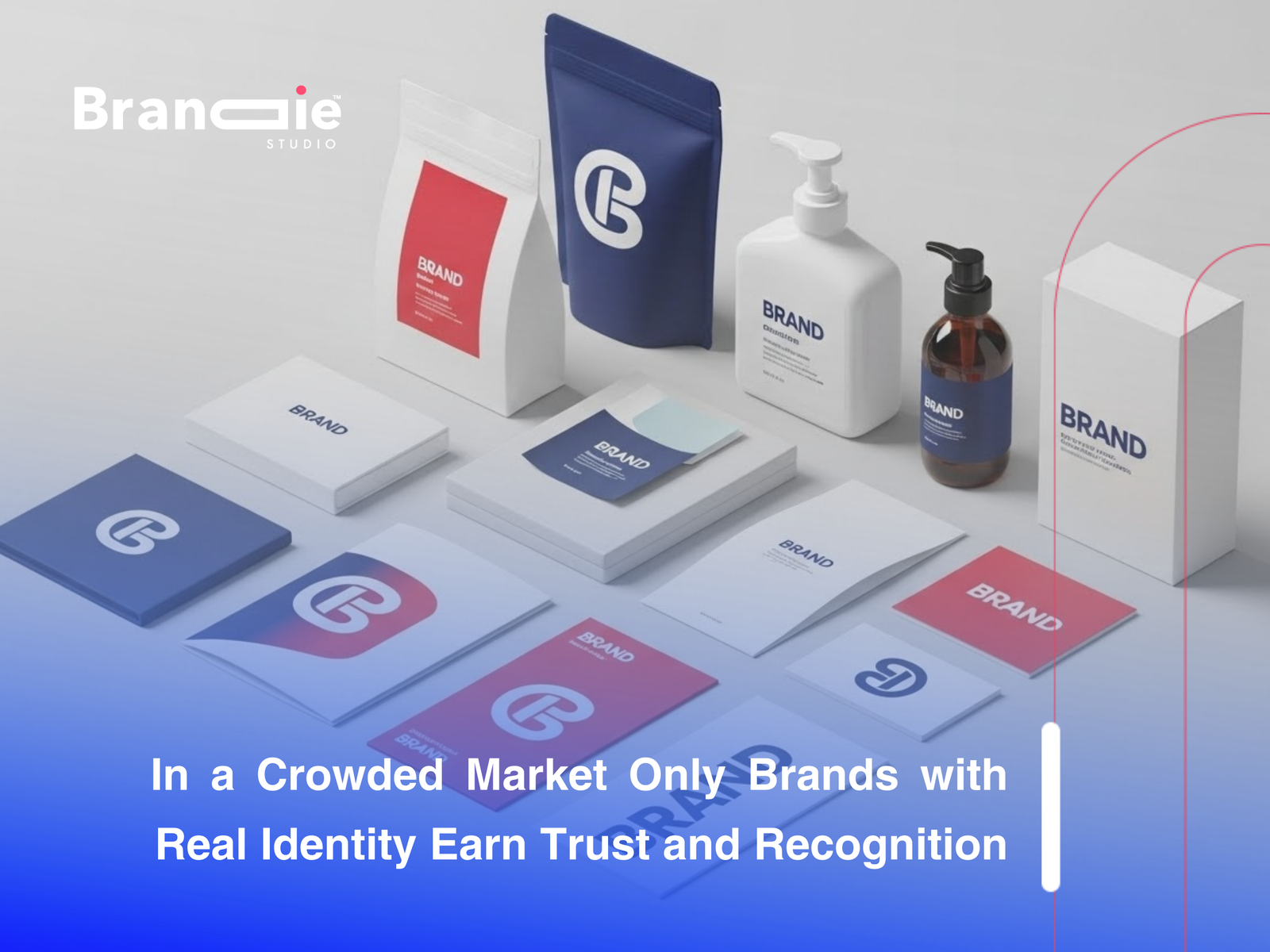
Most Branding Identity Work in Kuwait Looks the Same — Brandie Studio Doesn’t!
If everything looks the same, nothing is memorable — and that is the silent problem facing branding today.
Across the market, much of what is labeled as branding has turned into visual noise: familiar colors, recycled layouts, predictable logos, and identities that blend in instead of standing out. In the landscape of Branding identity Kuwait, sameness has become the norm, and distinction has become rare.
Many brands invest heavily in Branding identity Kuwait expecting differentiation, only to receive designs that feel interchangeable, safe, and forgettable. The result? Brands that look polished on the surface, yet lack depth, character, and strategic intent. What’s missing is not talent — it’s perspective. Real Branding identity Kuwait is not about decoration; it is about positioning, storytelling, and creating a visual system that communicates who you are before a single word is read.
This is exactly where Brandie Studio breaks away from the pattern.
At Brandie Studio, Branding identity Kuwait is treated as a strategic discipline, not a design routine.These questions transform Branding identity Kuwait from a visual exercise into a business asset — one that builds recognition, trust, and long-term brand equity.
While much of Branding identity Kuwait focuses on trends, Brandie Studio focuses on meaning. While others replicate what already exists, Brandie Studio designs from the inside out, ensuring that every color, typeface, and visual decision serves a clear purpose. This approach creates identities that don’t just look good today, but remain relevant, flexible, and powerful over time.
This is not branding that tries to fit in.
This is Branding identity Kuwait that is built to lead.
Why Trust Is Built Visually Before It Is Earned Operationally with Brandie Studio?
Trust is not something people decide to give — it is something they feel before they can explain why.
Long before a customer experiences service quality, operational excellence, or internal processes, trust is already forming silently and instantly.
In competitive markets, perception arrives first, and execution follows later. This is why Branding identity Kuwait plays a decisive role in whether a brand is trusted, questioned, or ignored from the very first moment.
read more: Why Branding Systems Matter More Than Campaigns
In reality, no customer starts with full information. What they have instead is visual evidence: logo, color system, typography, layout, tone, and overall presentation.
These elements work together to send subconscious signals about credibility, professionalism, stability, and seriousness.
In Branding identity Kuwait, this visual layer is not decoration — it is the first operational promise a brand makes before it delivers anything tangible.
Brands that underestimate visual trust often struggle to earn operational trust later.
Because once doubt is planted visually, operations must work twice as hard to overcome it. This is why strong Branding identity Kuwait is not a creative luxury, but a strategic foundation.
Visual Trust Is Immediate, Operational Trust Is Delayed
Human perception works faster than logic.
Visual systems are processed instantly, while operational proof requires time, interaction, and repetition.
Visual trust happens:
- In seconds
- Without explanation
- Before conscious evaluation
Operational trust requires:
- Usage
- Experience
- Consistency over time
This gap explains why Branding identity Kuwait carries so much weight. The visual identity introduces the brand before the brand can speak for itself. If that introduction is weak, confusing, or generic, trust is delayed — sometimes permanently.
Branding Identity Is the First Operational Signal
A strong brand identity communicates structure, intention, and discipline.
It silently answers critical questions customers never ask out loud.
Through Branding identity Kuwait, people subconsciously assess:
- Is this brand serious?
- Is it established or temporary?
- Does it feel reliable?
- Does it understand its market?
Before a single process is tested, visual identity already suggests how the brand operates internally. Clean systems suggest organized operations. Consistent visuals suggest consistency in delivery. Weak or inconsistent identity suggests risk.
Why People Trust What Looks Intentional
Intentional design builds confidence.
Random design creates hesitation.
In Branding identity Kuwait, brands that look intentional tend to:
- Be perceived as more professional
- Command higher perceived value
- Face less resistance during decision-making
- Earn quicker acceptance
This happens because intentional visual systems signal control. They imply that the brand knows who it is, what it does, and where it is going. Trust begins here — not in contracts or processes, but in clarity.
Visual Identity Reduces Perceived Risk
Every purchasing decision carries risk.
Strong branding reduces that risk psychologically.
When Branding identity Kuwait is executed properly, it:
- Makes the brand feel familiar
- Creates a sense of stability
- Suggests experience and longevity
- Calms uncertainty
Customers feel safer choosing brands that “look established,” even before they can verify performance. This is not superficial — it is human behavior.
Operational Excellence Cannot Save Weak Branding
Many brands believe operations will compensate for weak visuals.
In reality, weak visuals prevent operations from being tested at all.
If Branding identity Kuwait fails to inspire confidence:
- Users hesitate to engage
- Opportunities are lost early
- Trust barriers increase
- Marketing efficiency decreases
Operational excellence matters, but it must be reached first. Visual trust is what opens the door.
Comparison: Visual Trust vs Operational Trust
| Aspect | Visual Trust (Branding Identity) | Operational Trust |
| Speed | Instant | Gradual |
| Trigger | Visual perception | Experience |
| First impression | Critical | Secondary |
| Emotional impact | High | Moderate |
| Time required | Seconds | Weeks / Months |
| Dependency | Branding identity Kuwait | Processes & delivery |
This comparison shows why Branding identity Kuwait always leads the trust journey.
Consistency Builds Predictability — Predictability Builds Trust
Trust grows when things behave as expected.
Visual consistency trains expectation.
Strong Branding identity Kuwait ensures:
- The brand looks the same everywhere
- Messages align across platforms
- The experience feels predictable
Predictability reduces cognitive effort. And when effort is reduced, trust increases.
Visual Identity Reflects Internal Culture
Customers read culture through design.
Whether intentional or not, visuals reveal how a brand thinks.
Through Branding identity Kuwait, audiences sense:
- Discipline or chaos
- Focus or confusion
- Confidence or insecurity
This perception shapes trust long before any operational interaction occurs.
Why Mature Brands Invest Heavily in Visual Systems
Established brands do not rely on chance.
They understand that trust must be engineered.
In Branding identity Kuwait, mature brands invest because:
- Visual trust accelerates growth
- Strong identity protects reputation
- Clear systems support scaling
- Brand value compounds over time
They know trust earned visually reduces friction operationally.
Visual Trust Is Not Aesthetic — It Is Strategic
This is the most misunderstood truth.
Branding is not about beauty. It is about belief.
Branding identity Kuwait is a strategic layer that:
- Shapes perception
- Controls narrative
- Positions authority
- Builds emotional confidence
Operations fulfill promises — but branding makes people believe those promises first.
Trust is never earned from zero.
It begins visually, silently, and instantly.
Before customers experience performance, they experience perception. Before they test operations, they judge appearance. This is why Branding identity Kuwait is the foundation upon which all operational trust is built.
Brands that understand this do not wait for trust — they design it.
Brands that ignore it spend years trying to recover it.
In a market where attention is limited and decisions are fast, Branding identity Kuwait is not what your brand looks like — it is why people believe in you before you prove anything at all.
Recognition Versus Recall — And Why Brands Need Both with Brandie Studio?
Being seen is not the same as being remembered — and this is where most brands quietly fail.
In crowded markets, many brands celebrate visibility without realizing that visibility alone does not guarantee choice
. A logo may look familiar, a color palette may feel recognizable, yet when the moment of decision arrives, the brand is absent from the customer’s mind.
This gap between recognition and recall is one of the most misunderstood challenges in modern branding — and it is exactly where Branding identity Kuwait becomes a strategic necessity rather than a visual exercise.
Recognition happens when customers see your brand and say, “I’ve seen this before.”
Recall happens when customers think of your brand without seeing it.
Both are essential. And without a deliberate Branding identity Kuwait, brands often achieve one while failing at the other.
Understanding Recognition: The Power of Visual Familiarity
Recognition is triggered by exposure.
It relies heavily on visual cues.
In Branding identity Kuwait, recognition is built through:
- Consistent logos
- Repeated color systems
- Familiar layouts
- Predictable visual patterns
When customers scroll, walk, or browse, recognition allows your brand to stand out from noise. It reduces friction and signals familiarity. Recognition answers the question: “Do I know this brand?”
But recognition alone does not guarantee relevance, preference, or selection.
Understanding Recall: The Power of Mental Availability
Recall is far more demanding than recognition.
It requires the brand to occupy mental space.
With strong Branding identity Kuwait, recall allows customers to:
- Think of your brand when a need arises
- Mention your brand without prompts
- Associate your brand with a category or solution
Recall answers a much more powerful question: “Which brand comes to mind first?”
Brands with high recall are not just visible — they are mentally owned.
Why Recognition Without Recall Is Dangerous
Many brands stop at recognition and assume success.
This is a costly mistake.
A brand may be recognized yet never chosen.
In Branding identity Kuwait, this often happens when visuals are polished but lack meaning, narrative, or emotional connection.
Symptoms of recognition without recall include:
- High impressions, low conversions
- Familiar logos, weak brand loyalty
- Strong awareness, weak preference
Recognition opens the door. Recall decides who walks through it.
Why Recall Without Recognition Is Rare
Recall without recognition is difficult to sustain.
Mental availability needs reinforcement.
Even the strongest recalled brands rely on recognition cues to stay active in memory. This is why Branding identity Kuwait must design systems that support both — visibility and memorability.
Without consistent visual presence:
- Recall fades
- Associations weaken
- Competitors take mental space
Recognition keeps recall alive.
Branding Identity Is the Bridge Between Recognition and Recall
This is where branding becomes strategic.
A well-built Branding identity Kuwait:
- Creates recognizable visual systems
- Embeds meaning into those systems
- Repeats signals consistently
- Reinforces associations over time
Logos alone do not create recall.
Stories alone do not create recognition.
Identity systems connect both.
How Visual Systems Support Recognition
Recognition thrives on repetition and clarity.
Effective Branding identity Kuwait ensures:
- Visual consistency across platforms
- Clear hierarchy and structure
- Immediate brand identification
- Distinctiveness within the market
When visuals are intentional, recognition becomes effortless.
How Strategic Identity Builds Recall
Recall is not accidental — it is engineered.
Through Branding identity Kuwait, recall is strengthened by:
- Clear brand positioning
- Emotional tone consistency
- Verbal and visual alignment
- Strong category association
Brands that own a feeling, promise, or idea are easier to recall than those that only look “nice.”
Comparison: Recognition vs Recall
| Aspect | Recognition | Recall |
| Trigger | Seeing the brand | Thinking of the brand |
| Dependency | Visual exposure | Mental association |
| Speed | Immediate | Built over time |
| Impact on choice | Limited | High |
| Sustainability | Short-term | Long-term |
| Role of Branding identity Kuwait | Visual consistency | Strategic meaning |
This comparison shows why Branding identity Kuwait must serve both functions simultaneously.
Why Brands in Competitive Markets Need Both
In competitive environments, recognition is the entry fee.
Recall is the advantage.
With Branding identity Kuwait, brands that combine both:
- Reduce decision friction
- Shorten sales cycles
- Increase repeat selection
- Strengthen loyalty
Customers do not analyze brands deeply. They choose what feels familiar and mentally available.
Consistency Is the Accelerator
Consistency is what turns recognition into recall.
When Branding identity Kuwait is consistent:
- Visual cues reinforce memory
- Messages align across touchpoints
- Experiences feel predictable
Predictability builds trust.
Trust strengthens recall.
Why Tactical Marketing Alone Cannot Build Recall
Campaigns create spikes.
Identity creates memory.
Without a strong Branding identity Kuwait:
- Campaigns fade
- Attention resets
- Recall collapses
Brands need identity to accumulate value beyond individual efforts.
The Long-Term Cost of Ignoring Recall
Brands that focus only on recognition:
- Depend constantly on paid visibility
- Compete on price rather than preference
- Struggle to build loyalty
Brands that invest in Branding identity Kuwait reduce dependency and increase mental ownership.
Recognition makes your brand visible.
Recall makes your brand chosen.
In modern markets, brands do not win by being seen alone — they win by being remembered at the right moment. This is why Branding identity Kuwait must be designed to balance recognition and recall, visibility and meaning, exposure and memory.
Brands that master both do not chase attention — they attract choice.
Brands that ignore this balance remain familiar… but forgettable.
Branding identity Kuwait is not about being noticed once.
It is about being remembered first.
Emotional Branding as a Competitive Advantage with Brandie Studio
People do not choose brands logically — they justify them logically after choosing them emotionally.
This single truth explains why some brands dominate crowded markets while others struggle to be noticed, even when their products are similar or objectively better.
In competitive environments, functionality is expected, pricing is comparable, and differentiation is fragile.
What truly separates brands is emotion — and this is where Branding identity Kuwait becomes a decisive competitive advantage rather than a visual preference.
Emotional branding is not about manipulation or sentimentality. It is about meaning.
It is about how a brand makes people feel when they encounter it, remember it, or choose it.
In Branding identity Kuwait, emotional connection transforms brands from interchangeable options into preferred choices, from vendors into companions, and from names into experiences.
Brands that understand emotional branding do not fight harder in the market — they compete differently.
What Emotional Branding Really Means
Emotional branding goes beyond aesthetics and messaging.
It is the intentional design of perception, tone, and feeling.
Through Branding identity Kuwait, emotional branding:
- Creates familiarity
- Builds trust subconsciously
- Reduces decision anxiety
- Strengthens attachment
Customers rarely articulate these effects, but they act on them consistently. Emotion becomes the silent driver of preference.
Why Emotional Advantage Beats Functional Superiority
Functional benefits can be copied.
Emotional connections cannot.
In Branding identity Kuwait, brands that rely solely on features and pricing are vulnerable. Competitors can replicate offers quickly. But brands that own an emotion — confidence, safety, ambition, prestige, warmth — protect themselves from comparison.
Emotional branding:
- Shifts competition away from price
- Increases tolerance for mistakes
- Builds loyalty beyond transactions
- Creates long-term brand equity
This is why emotional advantage outperforms operational advantage over time.
Branding Identity Is the Emotional Delivery System
Emotion is not communicated randomly.
It is engineered through identity.
A strong Branding identity Kuwait aligns:
- Visual language
- Verbal tone
- Brand personality
- Customer expectations
Colors signal mood. Typography suggests character. Layout communicates control or chaos. Every element contributes to emotional interpretation before logic intervenes.
Brands do not “add” emotion later — emotion is embedded from the start.
How Emotional Branding Influences Decision Speed
Emotion accelerates decisions.
Logic slows them down.
When Branding identity Kuwait establishes emotional resonance:
- Customers decide faster
- Choices feel safer
- Justification comes afterward
This reduces friction in sales, marketing, and engagement. Brands that feel right require less explanation.
Emotional Branding Builds Trust Before Experience
Trust does not start after delivery.
It starts before interaction.
Through Branding identity Kuwait, emotional branding:
- Signals reliability
- Suggests competence
- Communicates intent
People trust brands that feel consistent, confident, and human. Emotional coherence creates predictability — and predictability creates trust.
Emotional Differentiation in Crowded Markets
In saturated categories, logic collapses.
Emotion becomes the only differentiator.
With Branding identity Kuwait, emotional differentiation allows brands to:
- Own a specific feeling
- Stand out without shouting
- Be remembered without repetition
When everything looks similar, emotion becomes the contrast.
Emotional Branding and Brand Recall
Emotion strengthens memory.
Brands connected to emotion are:
- Remembered longer
- Recalled faster
- Recommended more often
In Branding identity Kuwait, emotional cues turn recognition into recall. Customers do not just recognize the brand — they feel it when thinking about the category.
How Emotional Branding Reduces Price Sensitivity
Price sensitivity is highest when emotional value is lowest.
Strong Branding identity Kuwait:
- Increases perceived value
- Justifies premium positioning
- Reduces reliance on discounts
Customers pay more for brands they feel aligned with. Emotion reframes value beyond cost.
Emotional Branding Supports Long-Term Growth
Short-term tactics generate spikes.
Emotional branding generates momentum.
Through Branding identity Kuwait, brands with emotional depth:
- Scale more smoothly
- Survive market shifts
- Maintain relevance
- Build lasting loyalty
This transforms branding from an expense into an asset.
Tactical Branding vs Emotional Branding
| Aspect | Tactical Branding | Emotional Branding |
| Focus | Visual output | Emotional impact |
| Time horizon | Short-term | Long-term |
| Differentiation | Surface-level | Deep and defensible |
| Customer attachment | Weak | Strong |
| Role of Branding identity Kuwait | Cosmetic | Strategic |
This comparison highlights why emotional branding sustains advantage while tactics expire.
Why Emotional Branding Must Be Intentional
Emotion without strategy becomes inconsistency.
Strategy without emotion becomes indifference.
Branding identity Kuwait ensures emotional branding is:
- Deliberate
- Consistent
- Scalable
- Authentic
Brands that guess emotion confuse audiences. Brands that design emotion guide them.
Emotional Branding Is Not Soft — It Is Strategic
Emotion drives behavior.
Behavior drives revenue.
In Branding identity Kuwait, emotional branding:
- Influences preference
- Shapes loyalty
- Protects market position
It is not a creative layer. It is a competitive weapon.
Competitive advantage today is not built by being louder, cheaper, or faster.
It is built by being felt.
Brands that understand emotional branding do not chase customers — they attract them.
They do not rely on constant persuasion — they rely on connection. This is why Branding identity Kuwait is the foundation of emotional advantage, translating strategy into feeling and identity into loyalty.
In markets where products compete, emotions decide.
And brands that win emotionally… win sustainably.
Branding identity Kuwait is not how your brand looks.
It is why your brand matters.
In a market where competition is relentless and differentiation is rare, Branding identity Kuwait is not what brands add at the end — it is what defines who wins from the beginning. Trust is built in seconds, recognition is shaped through consistency, and brands that succeed are the ones that control both.
This is why Branding identity Kuwait is no longer optional in a competitive market — it is the foundation of credibility, authority, and long-term growth.
Brands that rely on chance blend into the background. Brands that invest strategically in Branding identity Kuwait stand out, feel established, and earn confidence before a single interaction takes place. Recognition brings visibility, trust brings choice — and only strong branding delivers both at the same time.
This is exactly where Brandie Studio makes the difference.
Not by following trends. Not by copying what already exists.
But by building Branding identity Kuwait systems that create trust instantly, recognition consistently, and brand value that compounds over time.
If your brand needs to be trusted before it is tested.
If your identity must be remembered, not mistaken.
If you want recognition that turns into preference — not noise.
Now is the moment.
Contact Brandie Studio today and let us build a Branding identity Kuwait that positions your brand with clarity, confidence, and authority in a market that rewards the brands that lead — not follow.
Branding identity Kuwait with Brandie Studio
is not just how your brand looks.
It’s why your brand is chosen.